Australian auger beetles (Bostrichidae)
(PostDoc project 2023-2026)
Taxonomic revision and monograph of native, introduced, and frequently intercepted species
[Funded by Department of Agriculture, Fisheries and Forestry, Australia, 2023-2026, $450,000]
Integrative taxonomy based on morphology and molecular data (high-throughput collection genomics).
Taxonomic revision of all Australian species, including descriptions of new genera and species.
New and comprehensive image database for Australian auger beetles.
New genomic datasets, including a comprehensive barcode reference library of expertly determined specimens.
Diagnostic tools for efficient biosecurity monitoring.
SEM images of diagnostic characters
(Images by Yun ‘Living’ Li)
Auger beetles in their natural habitats
(Images by Yun ‘Living’ Li)
Images of museum specimens
(Images by Yun ‘Living’ Li)
Microscopic images of diagnostic characters
(Images by Yun ‘Living’ Li)
Phylogenomics and ecomorphological evolution of darkling beetles (Tenebrionidae)
(PhD project Chapter I, 2019-2023)
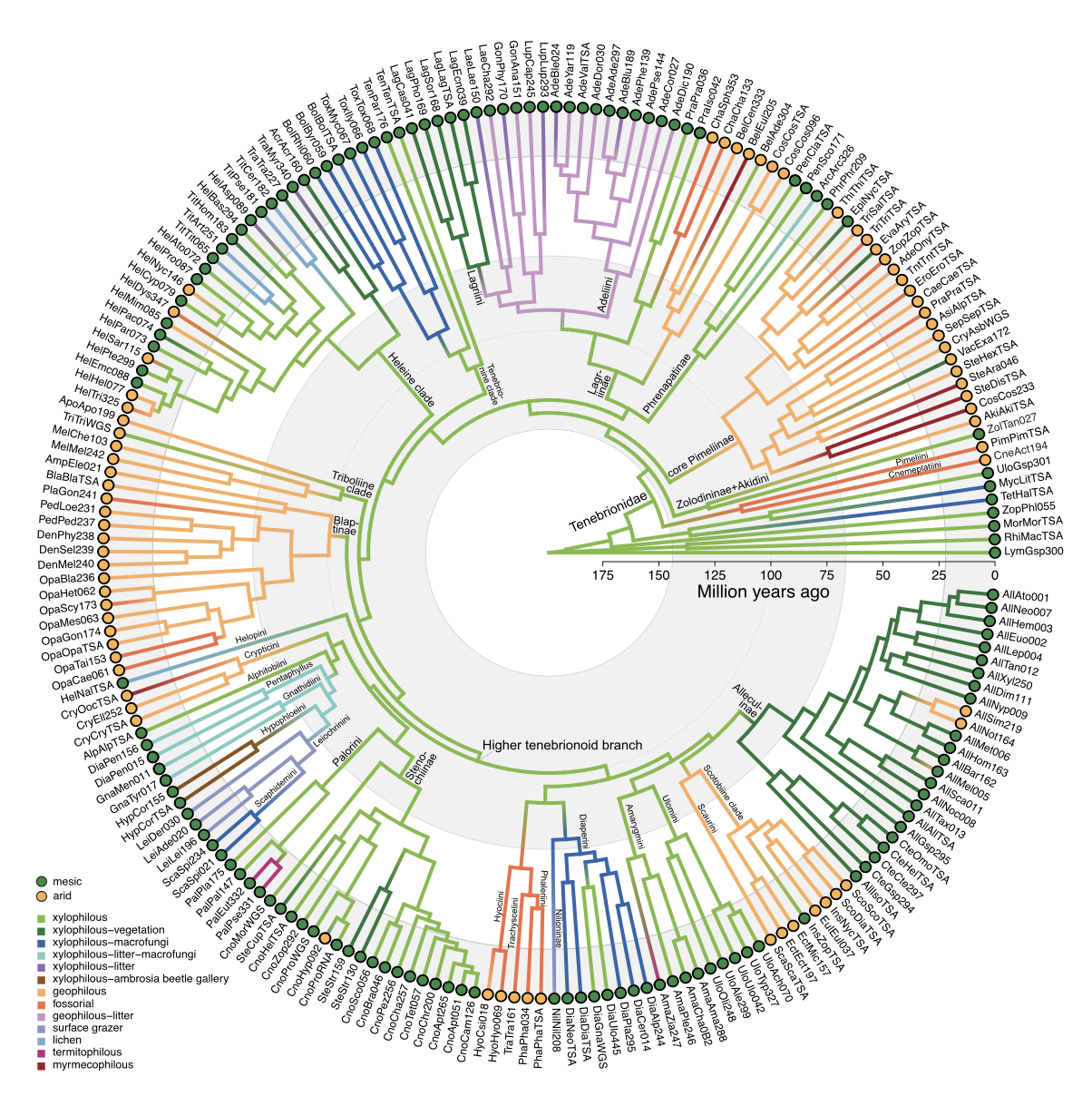
Darkling beetles are hyper-diverse. With over 30,000 species worldwide, they rank the seventh largest beetle family with enormous ecological and morphological diversity. Dedicated molecular studies of deep relationships within the family were scarce and uncertainty persists over the majority of back-bone relationships. Moreover, the lack of comprehensive ecomorphological datasets precluded a clear understanding of how the enormous biological diversity arose in the family. Here,
We offer a new and robust phylogenetic framework of the tenebrionid family using exon-capture, transcriptomic, and whole-genome sequencing, providing new insights into the higher level classification of the family. Our sampling includes 160 out of 216 (80%) Australian genera.
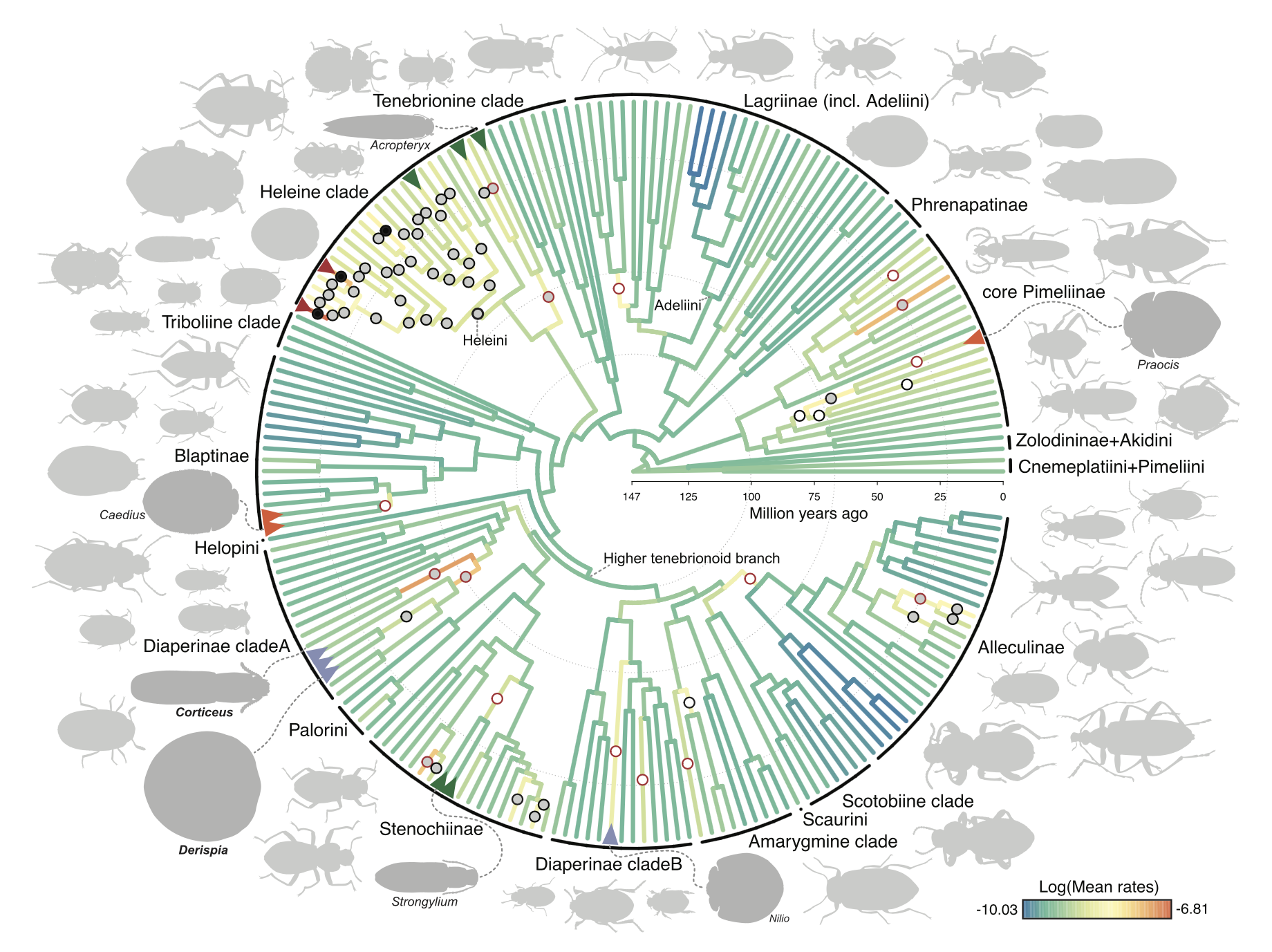
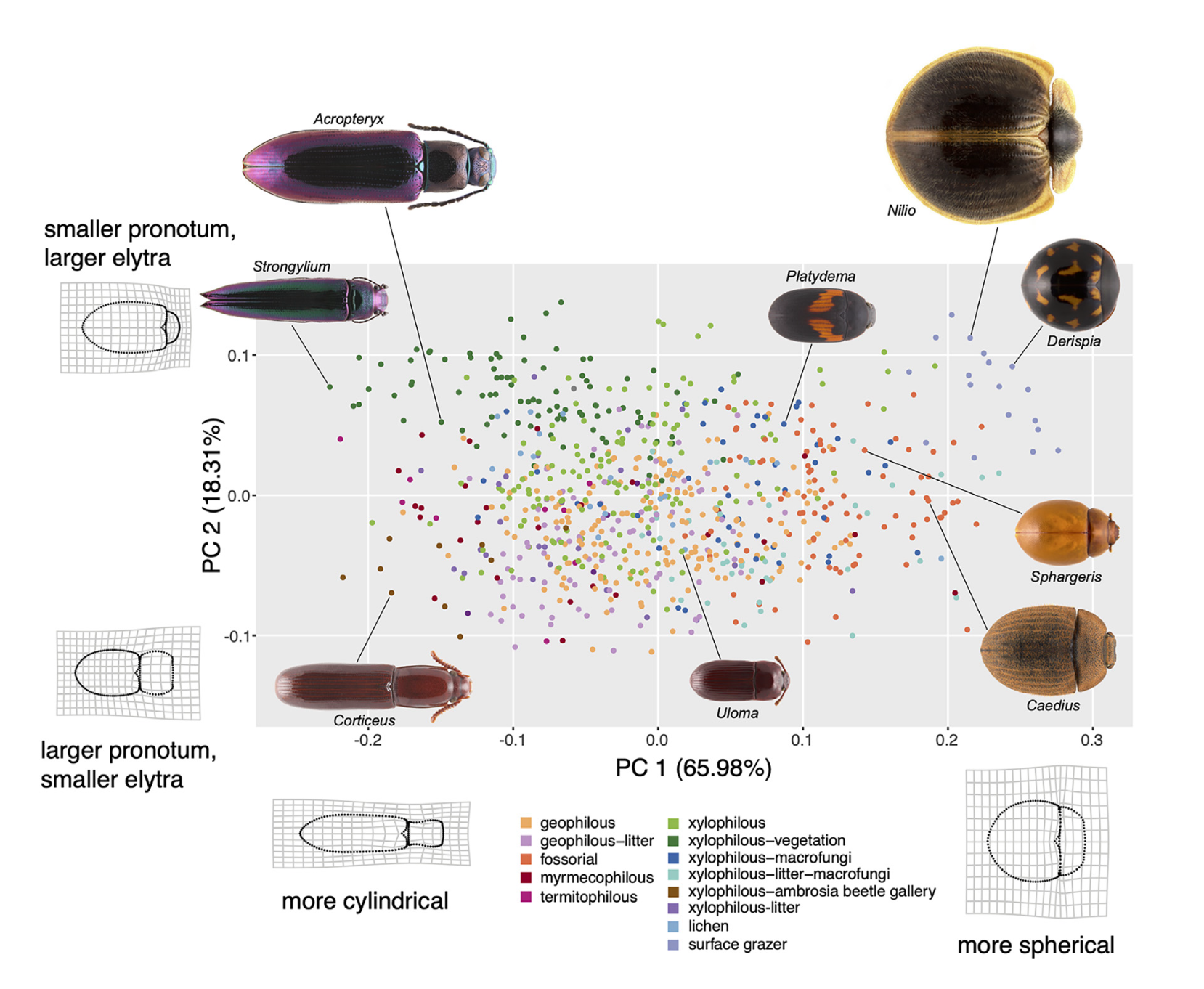
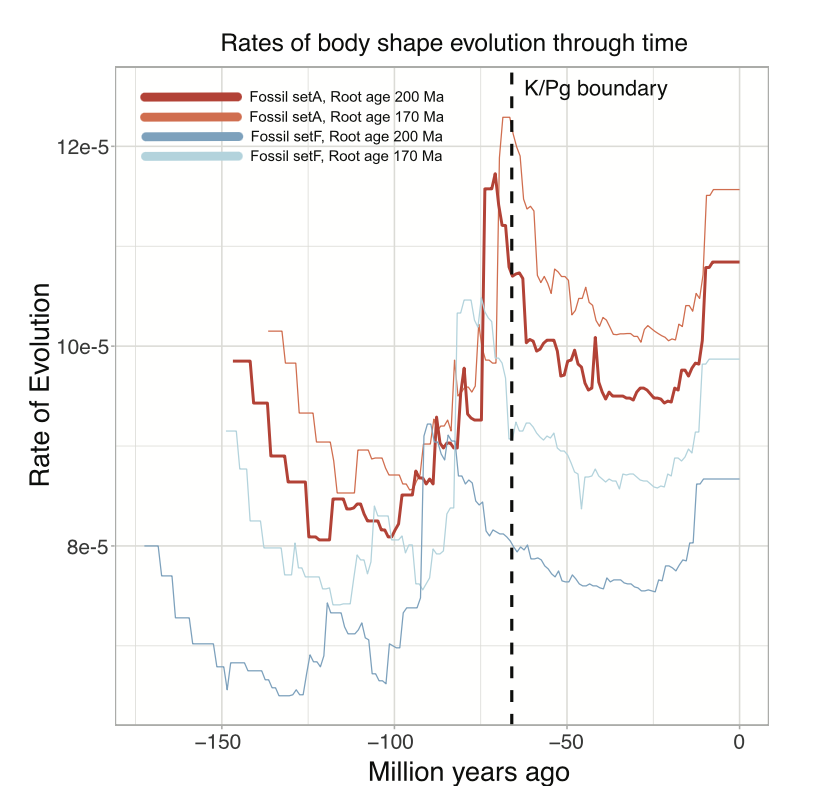
We reconstruct the tempo and mode of morphological diversification to address three key questions related to the Simpsonian model of adaptive evolution: (1) are rapid bursts of morphological evolution associated with ecological transitions or environmental changes? (2) Is morphological convergence driven by repeated ecological specializations? (3) Under the same geographical and environmental context, does ecological diversification dictate morphological evolution?
We show that the evolutionary history of this hyperdiverse beetle group is marked by ancient rapid radiations, frequent ecological transitions, and rapid bursts of morphological diversification.
Museomics and adaptive evolution of the Australian pie-dish beetle radiation
(PhD project Chapter II)
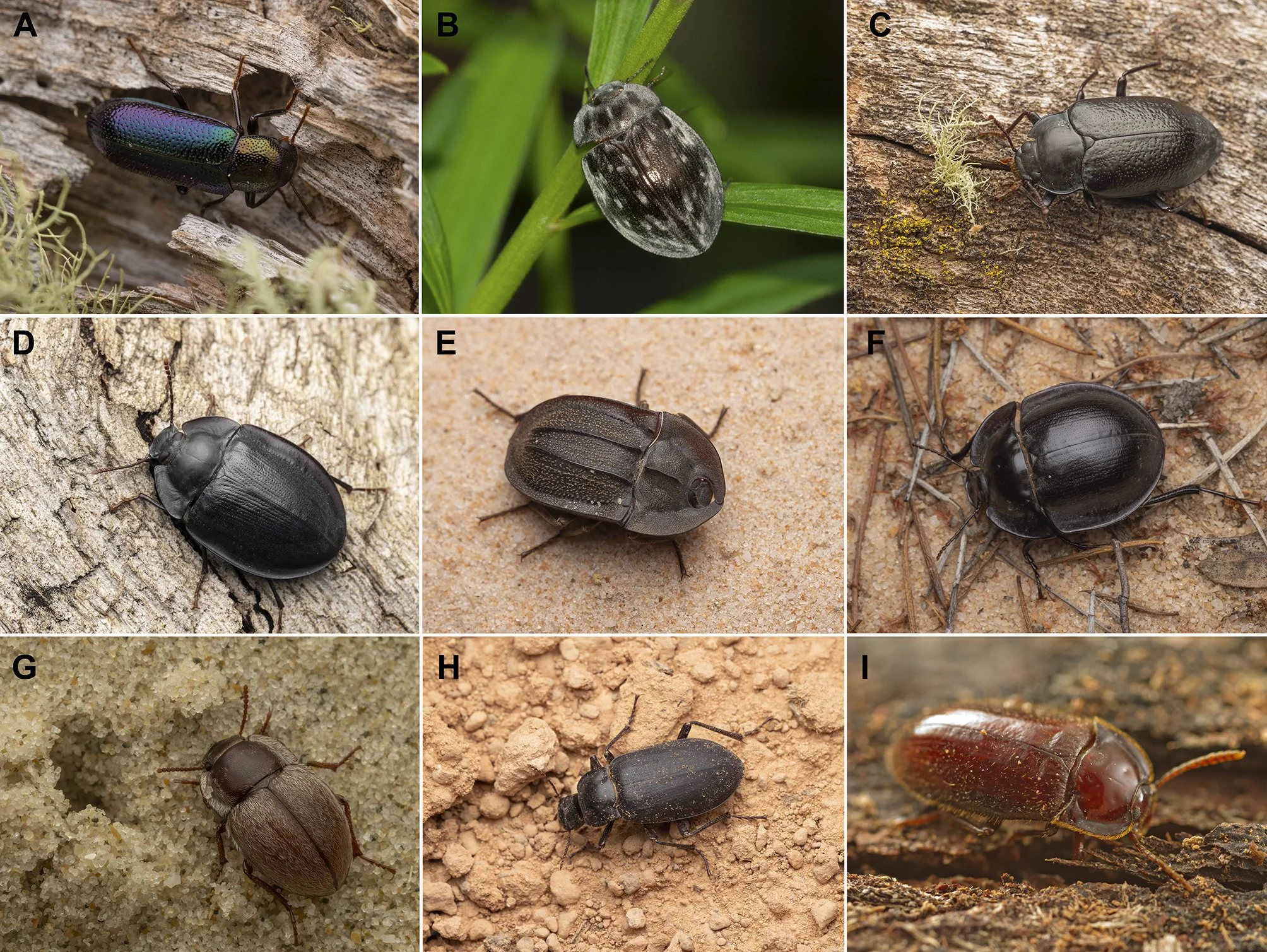
Species-level phylogenomic framework of the darkling beetle tribe Heleini (~600 species), one of the most diverse and spectacular insect radiations in Australian deserts.
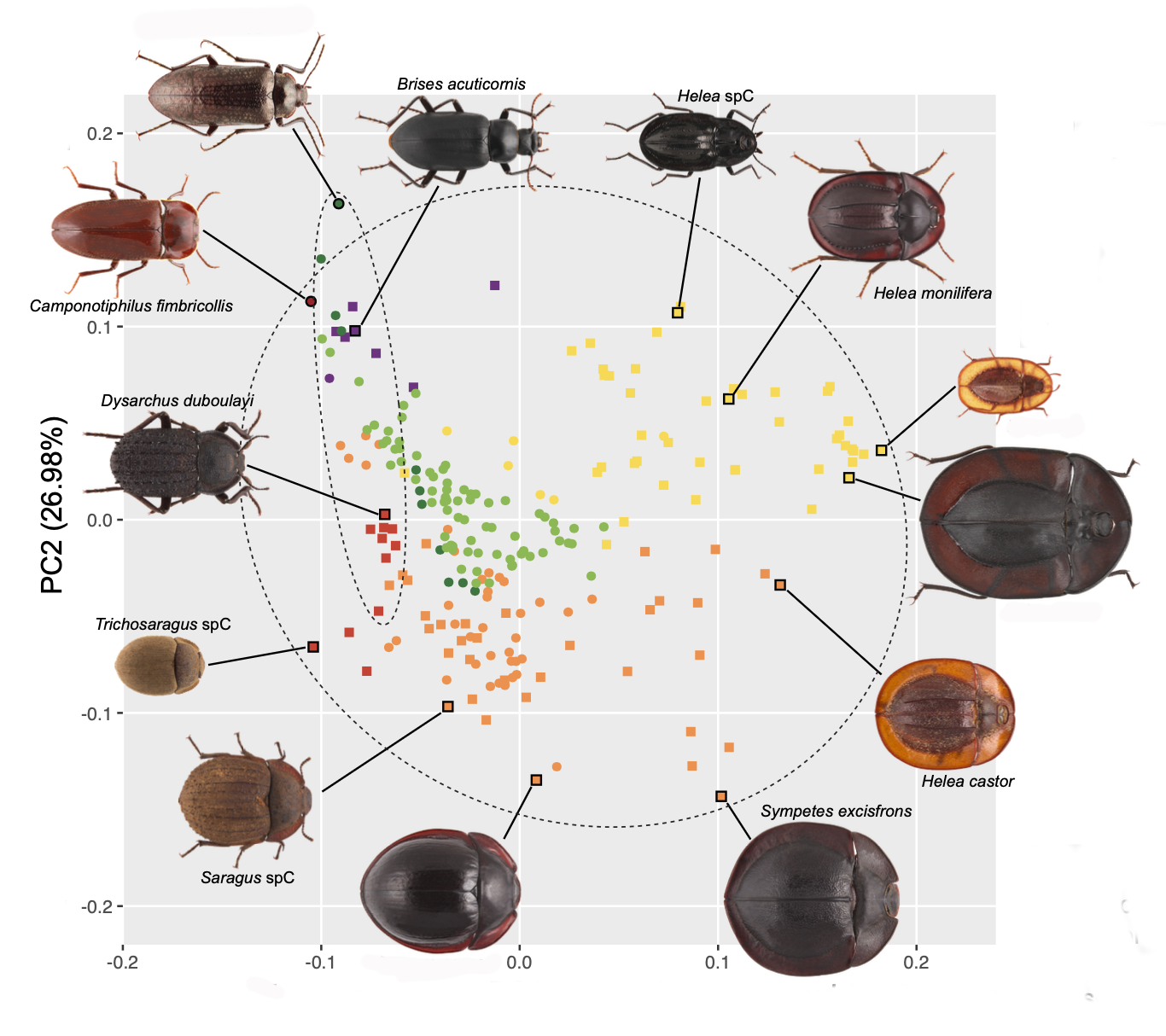
Comprehensive geometric morphometric datasets of Australian Heleini beetles.
Eco-morphological evolution over the course of the radiation.
Taxonomic monograph of all Australian Heleini species (Tenebrionidae).
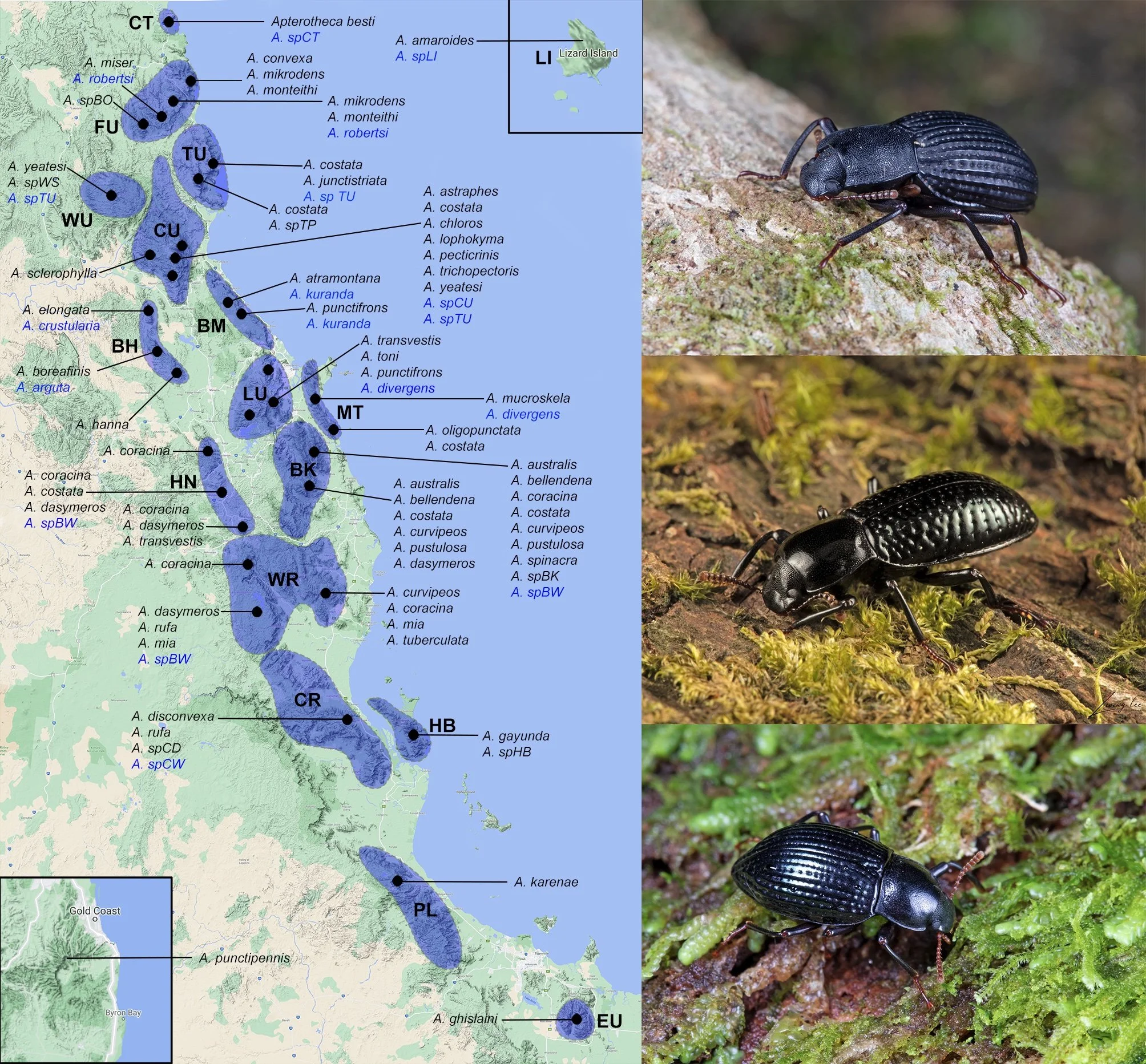
Ecological genomics on sky islands of Australian Wet Tropics
(PhD project Chapter III)
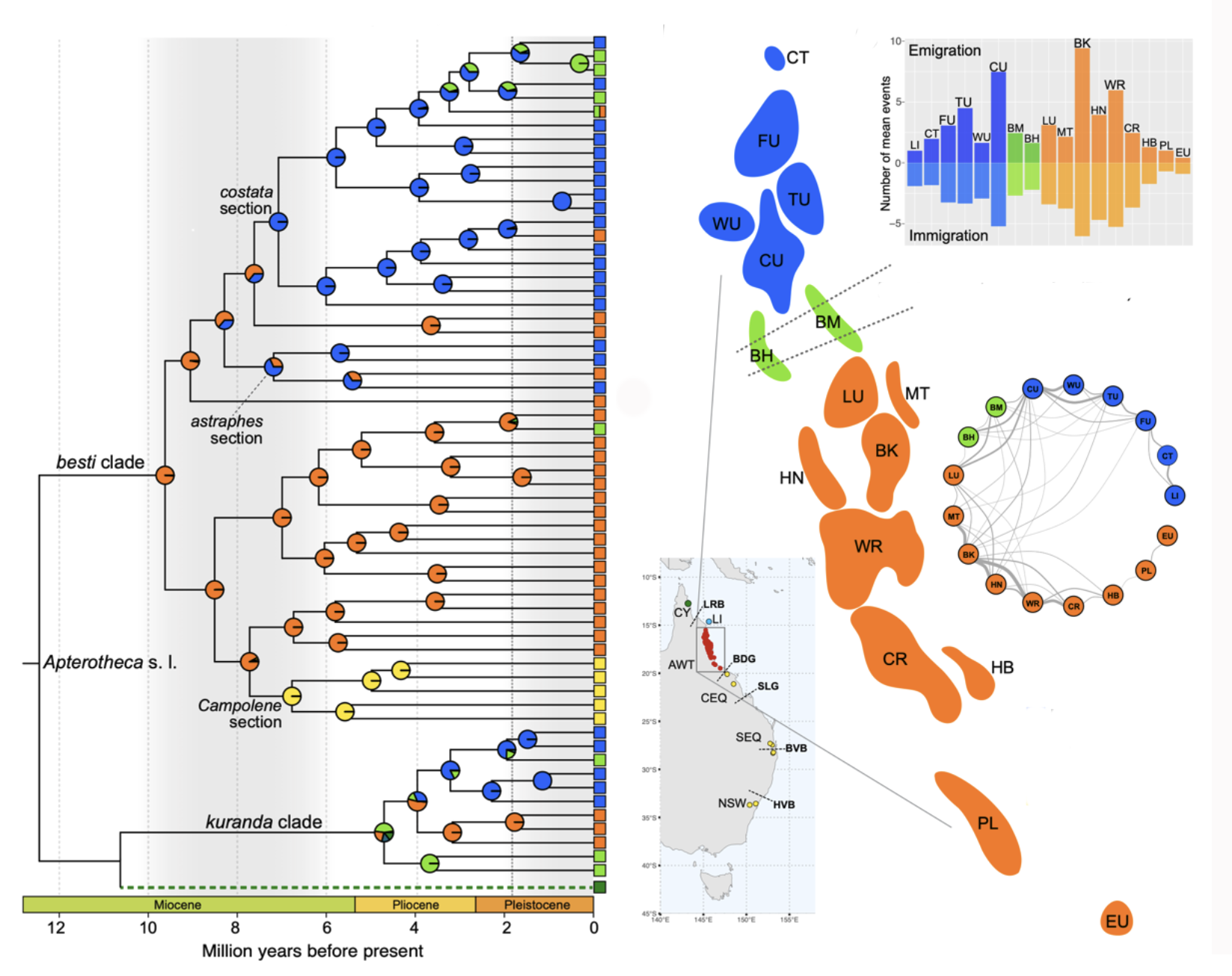
Phylogenomic framework of flightless Apterotheca species using WGS, exon-capture, and mitochondrial genomics (~60 species, 450 taxa).
Comprehensive spatial and trait datasets of Apterotheca beetles.
Island biogeography, speciation and introgression in the Wet Tropics.
Community genomics of mountain biodiversity in response to changing climates.
Taxonomic review of Apterotheca species (including descriptions of new taxa).
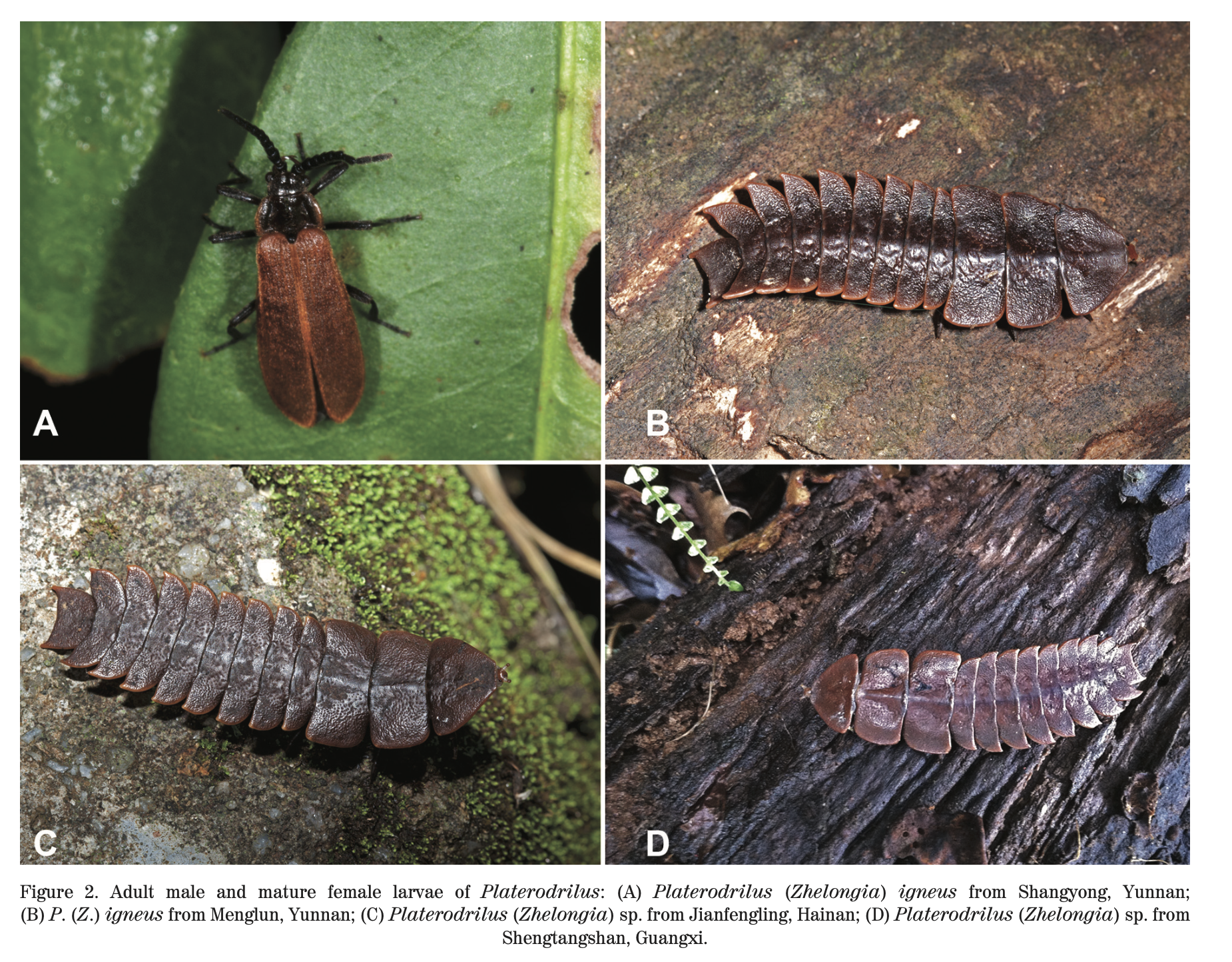
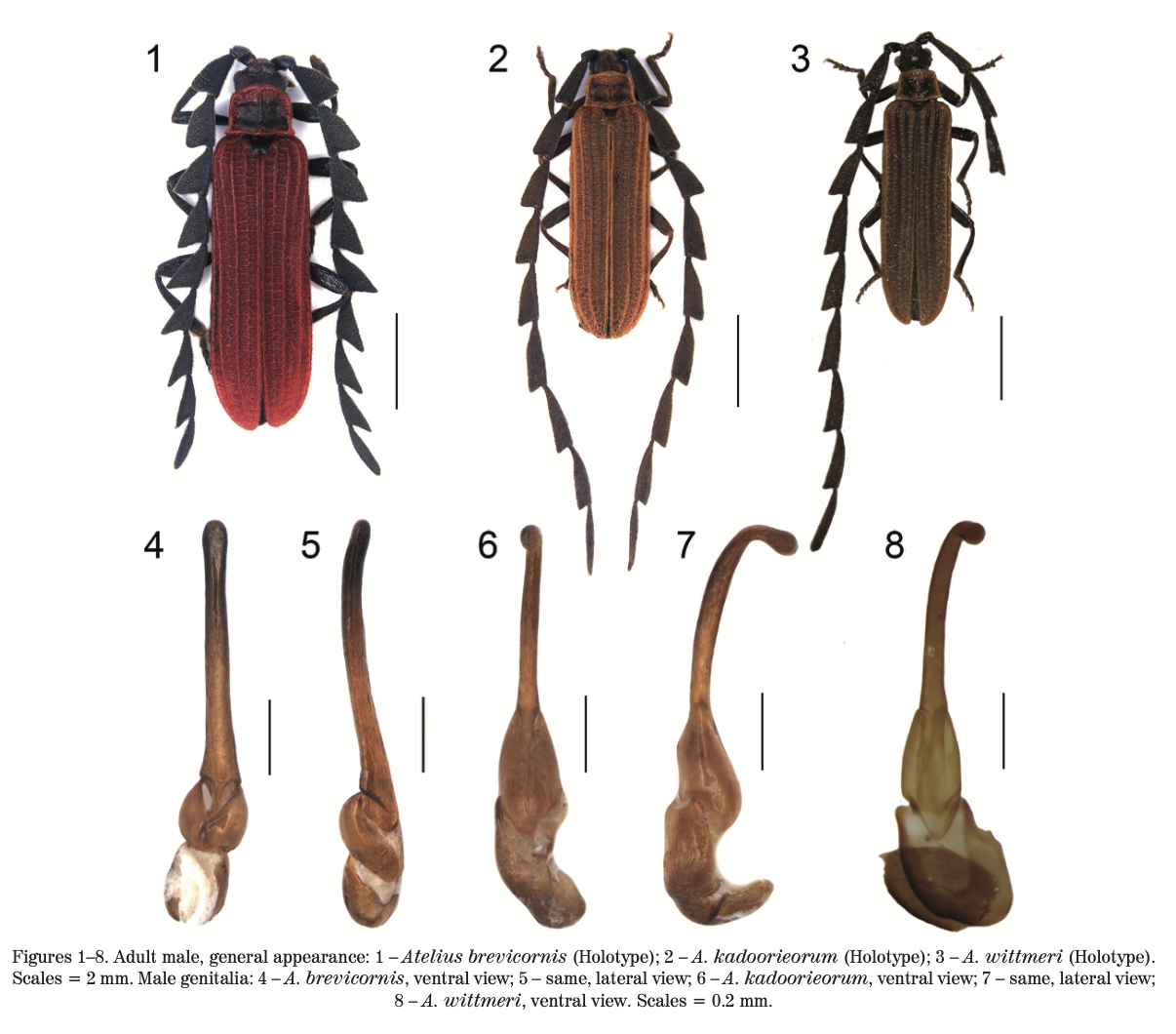
Molecular phylogeny and taxonomy of net-winged beetles (Lycidae) in China
(Master project 2011-2014)
Taxonomic revision of net-winged beetles from China, including tribes Macrolycini, Lyponiini, Erotini, the paedomorphic lineages Platerodrilini and Ateliini (>100 species altogether).
Descriptions of two new genera and 27 new species.
A mitochondrial dataset of ~800 lycid taxa from East Asia, in the era of Sanger sequencing.
Target sampling across 51 nature reserves in China, establishing the beetle ethanol collection at Sun Yat-sen Uni Museum (SYSM).
Molecular phylogeny, species delimitation, and biogeography of net-winged beetles in the east Palaearctic and Oriental Regions.
Sampling sites of Macrolycus species from China conducted by Yun ‘Living’ Li during 2010-2015
Sampling sites of Lyponia species from China conducted by Yun ‘Living’ Li during 2010-2015